Twelve Austin neighborhoods matched to who each one actually fits, judged on the same five things: what you can walk to, who the streets suit day to day, the schools the address is zoned to, a relative price tier, and the trade-off nobody mentions on a tour. Prices are tiers rather than medians, because the market moves monthly.
Where to live in Austin, organized by who each neighborhood actually fits rather than a strict best-to-worst ranking. Every entry is judged on the same five things: what you can reach on foot, who the streets suit day to day, the schools the address is zoned to, the price tier relative to the rest of the city, and the trade-off nobody mentions on a tour. The list is grouped that way too, from the walkable central neighborhoods out to the school-district suburbs. Prices here are relative tiers because the market moves monthly, so confirm current numbers with a local agent and recent comps. Built from citywide research, not a sales pitch.

Walkable and central
- Central-east · $$$ · creative, walkable, loud01
East Austin
The most-searched move for a reason: galleries, food trucks, patio bars, and live music packed into walkable blocks east of I-35, around East Cesar Chavez, Holly, and Govalle. It fits young creatives and anyone who wants to walk to dinner and a show. The trade-offs are fast-rising rents and real gentrification tension, and the closer you get to the action, the louder the weekends. Best if nightlife and food are the whole point. The food case for the move is easiest to see in the breakfast taquerias east of I-35.
- Central-south · $$$$ · iconic, walkable, pricey02
South Congress and Bouldin Creek
The postcard version of Austin: South Congress shops and restaurants, the skyline view from the bridge, and the leafy Bouldin bungalows just behind it. It fits people who want to be in the middle of it and will pay for the address. The catch is exactly that, it is expensive and busy with visitors, especially on weekends. Walkable, central, and never boring.
- South-central · $$$ · trendy, food-heavy, busy03
South Lamar and South First
The corridor where a lot of Austin’s best newer restaurants and bars landed, with a mix of apartments, condos, and older bungalows. It fits people who want the East Side energy on the south side of the river, closer to the greenbelt. The catch is that South Lamar traffic is some of the worst in town. Great food, real congestion.
- Downtown · $$$$ · high-rise, nightlife, car-light04
Rainey Street and Downtown
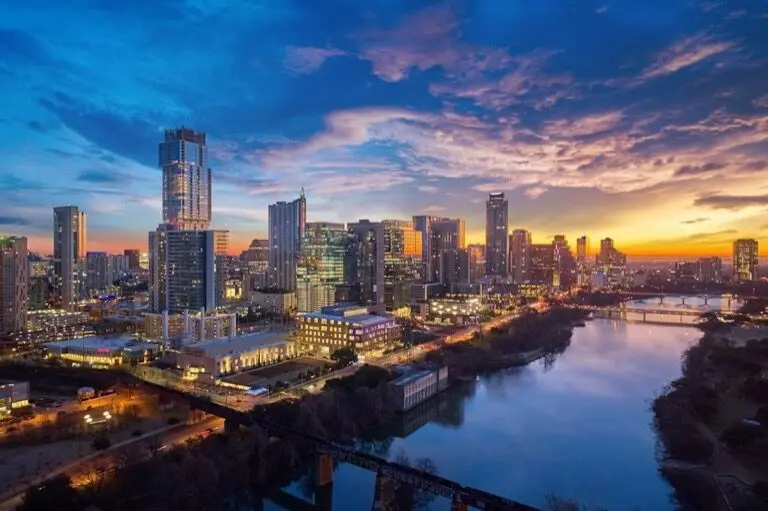
Photo: Justin Wallace / Unsplash High-rise condo living where you can leave the car parked: Rainey Street bars, the trail along the lake, and downtown at your feet. Two things opened next door in June 2026: the Confluence, a 13-acre second phase of Waterloo Greenway along Waller Creek between 4th Street and Lady Bird Lake, and the Emma S. Barrientos Mexican American Cultural Center on River Street, back after nearly three years of construction. It fits young professionals and empty nesters who want walkable nightlife and amenities over square footage. The trade-offs are HOA fees, weekend noise, and small floor plans. The most genuinely car-optional way to live in Austin.
Quieter, greener, and family-first
- Central · $$$ · historic, leafy, quiet05
Hyde Park
Austin’s first suburb, now its most charming central neighborhood: Victorian and bungalow streets, big oaks, and a slow, walkable pace near the university. It fits academics, grad students, and families who want character and central location over new construction. Homes are older and smaller, and you pay a premium for the charm and the trees. Quietly one of the best places to live in the city.
- Northeast-central · $$$ · planned, family, walkable06
Mueller
A master-planned community on the old airport site, a few miles from downtown, built around parks, wide sidewalks, a weekly farmers market, and modern homes. It fits families who want walkability and a real sense of community without leaving the city. The trade-off is that the new-urbanist look is uniform and the homes command a premium for the planning. The easiest in-town family pick.
- Back to top
- North-central · $$-$$$ · vintage, quieter, value-ish07
North Loop and Crestview
Two adjacent north-central neighborhoods that hold onto old-Austin character: North Loop has the vintage shops and dive charm, Crestview is quieter and more residential. Together they fit people who want personality and a shorter commute without paying central-west prices. The relative value is the draw, and it is shrinking every year. A sweet spot between weird and practical.
- South-central · $$$$ · outdoorsy, green, active08
Zilker and Barton Hills
Built around Zilker Park, Barton Springs, and the greenbelt, this is the move for people who want the outdoors out their front door. It fits active families and anyone who plans their weekends around the water and the trails. Prices climbed hard with the park access, and traffic around the park gets heavy during festivals. The city’s vision plan for redeveloping Zilker was halted in 2023 and never adopted, so the park you buy next to is the park that stays. Hard to beat if green space is your priority.
The high end
- Central-west · $$$$ · established, walkable, upscale09
Clarksville and Old West Austin
A historic district of cottages and tree-lined streets minutes from downtown, including Tarrytown nearby. It fits established professionals and families who want walkable charm and proximity without the East Side noise. The catch is the price, this is some of the most coveted central real estate in Austin. Calm, pretty, and very central.
- West · $$$$$ · top schools, wooded, wealthy10
Westlake (West Lake Hills and Eanes ISD)
The Hill Country enclaves west of the lake, anchored by Eanes ISD, which scored an A at 94 in the state’s preliminary 2026 school ratings, the top mark among the districts this guide names. It fits families optimizing for schools and space who can afford the premium. The trade-offs are the cost, the hilly drives, and a quieter, more spread-out feel than the city neighborhoods. The default answer when the priority is public schools.
Schools and space in the suburbs
- North suburbs · $$ · value, family, commuter11
Round Rock and Pflugerville
Established suburbs just north with their own job centers, parks, and Round Rock ISD schools, at prices well below the central neighborhoods. Round Rock ISD earned a B at 89 in the state’s preliminary 2026 ratings, the stronger of the two suburban districts on this list. They fit families who want newer homes, more space, and strong schools and will trade a commute for it. The catch is exactly that commute and a more generic suburban feel. The value-and-schools workhorse of the metro.
- Northwest suburbs · $$ · family, newer, growing12
Cedar Park and Leander
Fast-growing northwest suburbs served largely by Leander ISD, which earned a B at 87 in the state’s preliminary 2026 ratings, two points behind Round Rock. They fit families who want new construction, value, and good schools, with a small-town feel and big-city amenities nearby. The trade-off is distance from the urban core and the traffic that comes with rapid growth. A newer-build alternative to Round Rock.
What we considered and didn’t include
The things we passed on are part of the value. Documented for editorial discipline.
- The far exurbs (Buda, Kyle, Manor, Dripping Springs)More space and lower prices, and right for some buyers, but the commute into the city is real and growing. Worth a look if you rarely need to be in town and want the most house for the money.
- Safest-neighborhood rankings as a sole filterNo city or police source publishes one. Austin police report crime by council district, patrol sector, and census block group rather than by neighborhood name, so every neighborhood safety ranking you find is somebody’s own arithmetic laid over that. The honest version is block by block, which is why this guide is organized by fit and what is there instead. Look the address up in CrimeViewer and spend time on the street before you commit.
- Exact home prices and investment callsAustin’s market moves fast, so this guide uses relative tiers rather than dollar figures that go stale. For real numbers and whether an area is a good buy, talk to a local agent and look at recent comps.
Common questions
- What is the best neighborhood in Austin?
- It depends on what you want. For walkable food and nightlife, East Austin or South Congress. For an in-town family feel, Mueller, Crestview, or Hyde Park. For top schools and space, Westlake (Eanes ISD), Round Rock, or Cedar Park. For car-free downtown living, Rainey Street and the downtown high-rises. The list above gives the vibe and trade-off for each.
- What are the best Austin neighborhoods for families?
- In town, Mueller, Crestview and Brentwood, and Hyde Park balance walkability with a family feel. For schools and more space, the suburbs lead: Westlake (Eanes ISD, which scored an A at 94 in the state’s preliminary 2026 ratings), Round Rock (Round Rock ISD), and Cedar Park and Leander (Leander ISD). Verify the exact zoned schools for any specific address, since they vary block to block.
- What are the most walkable neighborhoods in Austin?
- East Austin, South Congress and Bouldin Creek, Hyde Park, and the downtown and Rainey Street high-rises are the most genuinely walkable, with Mueller close behind for a planned, sidewalk-first design. Most of the rest of Austin still assumes a car.
- Which Austin neighborhoods have the best schools?
- Westlake and West Lake Hills, which are zoned to Eanes ISD. Eanes scored an A at 94 in the Texas Education Agency’s preliminary 2026 A-F ratings, released August 14, 2026, ahead of Lake Travis ISD at 91, Round Rock ISD at 89, Leander ISD at 87, and Austin ISD at 81, up from a C the year before. Those 2026 scores are preliminary and the newest final ratings are still the 2025 set, so read them as a direction rather than a verdict. Zoning inside Austin ISD changes street to street, so confirm the exact schools an address is zoned to.
- What are the most affordable neighborhoods in Austin?
- The value is north and out. Round Rock, Pflugerville, Cedar Park, and Leander sit a price tier below the central neighborhoods for newer houses and more square footage, and the exurbs past them, Buda, Kyle, Manor, and Dripping Springs, go lower still. Inside the city, the closest thing to relative value is the north-central pocket around North Loop and Crestview, and that gap narrows every year. What you pay for the savings is drive time, so price the commute before you price the house.
- Is it cheaper to live in the Austin suburbs?
- Generally yes. Round Rock, Pflugerville, Cedar Park, and Leander offer newer homes, more space, and lower prices than the central neighborhoods, plus strong school districts. The trade-off is the commute into the city and a more standard suburban feel.
- What are the most expensive neighborhoods in Austin?
- Westlake and West Lake Hills, Barton Creek, the central-west enclaves around Tarrytown and Old Enfield, and the downtown high-rise condos sit at the top of the market. Central, walkable neighborhoods like South Congress and Clarksville also command a premium for the location.
- What is the wealthiest neighborhood in Austin?
- Westlake, in the hills west of Lake Austin, is the usual answer, and it is the only entry on this page in the top price tier. It buys space and seclusion, which is the opposite trade from every other expensive address in Austin, where the premium is for being close to everything. Barton Creek, the central-west streets around Tarrytown and Old Enfield, and the newest downtown high-rises make up the rest of the top of the market. This guide stays with relative tiers rather than dollar figures, because a price printed today is wrong by spring.
- What is the safest area to live in Austin?
- There is no single safe neighborhood, no official ranking of them exists, and the city’s own numbers show why. In Austin’s 2025 crime reports, more than half of all robberies and aggravated assaults fall inside about 100 of the roughly 500 census block groups that recorded one, so safety here is a block-level question rather than a neighborhood-level one. By violent-crime report count the quietest council districts in 2025 were District 8 in southwest Austin, District 10 in west Austin, and District 6 in the northwest, and the districts are drawn to near-equal population, so the counts are not just a population artifact. Check a specific address in the Austin Police Department’s CrimeViewer, which maps reports to blocks rather than to neighborhood names, before you sign anything.
- Which areas of Austin should I avoid?
- Neighborhoods are the wrong unit. Austin logged 2,192 aggravated assaults in 2025, and 1,079 of them were family violence while 1,169 happened at a residence, so the largest violent-crime category is mostly not a stranger on a street. What a new resident actually meets is the car break-in: 6,771 vehicle burglaries, the second most reported incident in the city, and District 10 in west Austin recorded the third-highest count of any district. Time is the better filter. About a third of aggravated assaults and robberies happened between 10pm and 4am, and the central district that covers downtown and the university runs higher still.
- How long will the I-35 construction through Austin last?
- Into the 2030s. The Texas Department of Transportation is lowering the I-35 mainlanes through central Austin and removing the upper decks, and the segment from Holly Street south to Ben White has been under construction since 2025 on a schedule that runs to 2033. The downtown and university segments, the two that rebuild the highway alongside the central neighborhoods, do not start until 2027 and also run to 2033. Between an address a block off the highway and one a mile away, that is the difference between living beside the work and reading about it.
- When will Austin light rail open?
- Not for years. Austin Transit Partnership has the first line opening for service in 2033, 9.8 miles from 38th Street on Guadalupe through downtown to South Congress and East Riverside. Engineering, permitting, and preconstruction run through 2026 and 2027, and construction and testing are scheduled from 2027 to 2033. Buying near the route for the station is a decade-long bet, not a near-term one.
Related guides